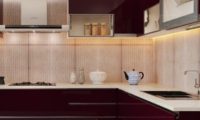
Handleless kitchen cabinets have moved from a European design statement to one of the most requested features in modern kitchens. The appeal is easy to see: a smooth, uninterrupted front with no hardware to catch on clothing, collect grease or interrupt the lines of the room.
But the style comes with real trade-offs, and “handleless” covers several different opening systems that behave very differently in daily use. This guide explains how handleless kitchen cabinets work, weighs their benefits and drawbacks honestly, and helps you decide whether they suit your kitchen.
What Are Handleless Kitchen Cabinets?
Handleless kitchen cabinets are cabinets without traditional protruding handles or knobs. Instead, doors and drawers open through an integrated grip, such as a J-pull, a Gola channel or a recessed finger pull, or through a push-to-open mechanism. The result is a smooth, uninterrupted front that suits modern and minimalist kitchen design.
The idea is simple, but the execution matters. The opening system affects how the kitchen feels to use, how it is cleaned, how the cabinets are built and how much the whole kitchen costs.
How Do Handleless Kitchen Cabinets Work?
There is no single handleless mechanism. Most handleless kitchen designs use one of five approaches, and each suits a different kind of home and user.
J-Pull Kitchen Cabinets
A J-pull is a shaped edge, curved like the letter “J”, built into the top or side of a door or drawer front. You slip your fingers behind the curve and pull. Because the grip is part of the cabinet itself, it gives a clean line while remaining easy to use, even with wet or oily hands. It is one of the most user-friendly handleless kitchen cabinet mechanisms.
Gola Profile Handleless Cabinets
The Gola system uses a horizontal aluminium channel running along the top of base cabinets and beneath wall cabinets. You reach into the channel to open the door or drawer below or above it. Because the channel is continuous, it creates a strong horizontal line across the kitchen and works well in long, linear layouts. It can also become a deliberate design feature, with the profile finished in a contrasting colour.
Recessed or Cut-Out Finger Pulls
Here, a small recess or cut-out is machined into the door or drawer edge, giving fingers something to grip. It is the most discreet version of a handleless kitchen door, since the pull nearly disappears into the front. It relies on precise cutting and consistent finishing along the edge.
Push-to-Open Cabinets
Push-to-open systems use a spring-loaded mechanism. A light press on the door or drawer front releases it, and it opens slightly. Some systems use electrical assistance, and many are paired with soft-close hardware. With no grip of any kind on the front, this gives the cleanest look, but it also asks the most of the hardware and the fit of the doors.
True Handleless Kitchen Cabinets
A true handleless kitchen has no visible profile, pull or cut-out anywhere on the front. Fronts are completely flat, and opening is typically handled by push-to-open or touch-latch hardware. This is the most minimal option and the most exacting to plan, since everything depends on precise construction and quality hardware.
Benefits of Handleless Kitchen Cabinets
Clean and Minimalist Appearance
The main draw is visual. Without handles, cabinet fronts read as continuous surfaces, which makes even a compact kitchen feel calmer and more spacious. It also lets finishes and materials take centre stage, whether that is a wood grain, a matte lacquer or a textured laminate.
Easier Cleaning and Maintenance
With no handles to work around, wiping cabinet fronts is quicker. There are no crevices around hardware where dust and cooking oil build up. Bear in mind that profiles and channels need occasional cleaning of their own, which is covered under the drawbacks below.
Improved Safety and Accessibility
Protruding handles are a common cause of bumped hips and snagged clothing, especially in narrow kitchens or busy family homes. A flat front removes that risk. Grip-style systems such as J-pulls can also be easier for people with limited hand strength than small knobs.
Efficient Use of Kitchen Space
In a tight aisle, even a few centimetres of protruding hardware affects how comfortably two people can pass. Handleless fronts keep the aisle clear and make the kitchen feel less crowded.
Seamless Integration With Modern Kitchen Design
Handleless kitchen design pairs naturally with integrated appliances, slab-style doors and open-plan layouts, where the kitchen shares a room with living or dining areas. It lets the kitchen blend into the space rather than announce itself as a separate zone.
Drawbacks of Handleless Kitchen Cabinets
Higher Cost
Handleless systems generally cost more than a comparable kitchen with handles. Profiles, precision machining, and higher-grade push-to-open or soft-close hardware all add to the price. The gap varies widely by system, so it is worth comparing specific options rather than assuming a fixed premium.
Fingerprints and Smudges
Because you touch the front edge to open the door, that area collects marks, especially on dark, high-gloss or lacquered finishes. Matt, textured or anti-fingerprint surfaces hide this far better. Choosing the finish and the opening system together avoids most of the problem.
Ergonomic Considerations
Gola channels and J-pulls sit at specific heights, and a badly placed grip can mean awkward reaching or bending, especially on tall units or high wall cabinets. Push-to-open on heavy drawers also needs well-matched hardware to feel effortless. These are design issues, and a careful plan resolves most of them.
Learning Curve for Opening Cabinets
Guests and new household members may not immediately know how to open a push-to-open or flat-front cabinet. It is a small adjustment, but for households with elderly relatives or frequent visitors, the more visible J-pull or Gola grip can be more intuitive.
Handleless Kitchen Cabinets vs Traditional Handle Cabinets
Neither approach is better in every case. The choice depends on your priorities: style, budget, everyday habits and who uses the kitchen.
Design and Aesthetics
Handleless kitchen cabinets give a sleek, contemporary look with unbroken lines. Handled cabinets offer more room for character, since the hardware itself can be a design statement, and they suit traditional, transitional and classic schemes better.
Functionality and Accessibility
Handles are instantly understandable and easy to grip for everyone. Handleless systems vary: J-pulls and Gola channels are easy to use, while push-to-open and true handleless systems need good hardware and some familiarity.
Cleaning and Maintenance
Handleless fronts are quicker to wipe, but the edge you touch and any channels need attention. Traditional handles can trap grease around their fixings, though they keep fingerprints off the door surface.
Space and Movement
Handleless kitchens keep aisles clear of protruding hardware. In compact or heavily used kitchens, this can be a real advantage.
Cost
Handled kitchens are usually the less expensive route because they use simpler fronts and standard hardware. Handleless kitchens typically cost more, for the reasons above.
How to Choose the Right Handleless Kitchen Cabinet System
Consider Your Kitchen Layout
Long, linear kitchens suit Gola profiles, which reinforce the horizontal line. Compact kitchens often work well with J-pulls or finger pulls. In open-plan homes, a more minimal system helps the kitchen blend with the room. If you are still deciding on layout, our modular kitchen design page is a useful place to compare options.
Choose the Right Opening Mechanism
Match the mechanism to how you live. If several people of different ages use the kitchen, a visible grip is more forgiving. If you want the most minimal look and are comfortable with a learning curve, push-to-open or true handleless is worth considering, provided the hardware is good.
Consider Cabinet Materials and Finishes
Finish and mechanism work as a pair. High-gloss and dark finishes show fingerprints along the opening edge, while matt and textured surfaces are more forgiving. Check that the material can hold a clean, precise edge for grips and cut-outs.
Plan Appliance Integration
Integrated fridges, dishwashers and ovens sit behind matching fronts in a handleless kitchen. Decide on appliances early, since each one needs a compatible opening solution and precise clearances. Appliance dimensions also affect the cabinet sizing around them.
Consider Everyday Usage and Ergonomics
Think through heavy drawers, tall units and high wall cabinets. Check the grip position for each user’s height and reach, and test how heavy items feel to open. This is where a proper design consultation pays off, because a mock-up or detailed plan shows problems that a render does not.
A bespoke approach helps here. When cabinets are made to exact dimensions rather than from fixed modules, the opening system, hardware and clearances can be planned together around your kitchen. This is how Saviesa approaches a handleless modular kitchen with European hardware and the precision that flat-front systems demand.
Handleless Kitchen Cabinet Design Ideas
Handleless Cabinets for Modern Kitchens
In a modern kitchen, a Gola profile or true handleless system in a matt neutral, with tall units running floor to ceiling, creates a calm, architectural look. Keep hardware and profiles consistent in colour so the lines stay clean.
Handleless Cabinets for Small Kitchens
In a small kitchen, handleless cabinets keep surfaces uninterrupted and aisles clear. J-pulls and finger pulls tend to work well here because they are easy to use and do not add visual clutter. Lighter finishes help the space feel larger.
Handleless Cabinets With Integrated Appliances
Panel-ready appliances behind matching fronts make the whole run read as one surface. This works best when the opening logic is consistent, so that the appliances open the same way as the cabinets beside them.
Combining Different Finishes in a Handleless Kitchen
Because there is no hardware to compete with, handleless kitchens are well suited to combining materials: wood grain with matt lacquer, or a contrasting island against the main run. A single profile colour or a consistent edge detail helps the mix look intentional.
Are Handleless Kitchen Cabinets Practical for Indian Kitchens?
They can be, with thoughtful choices. Indian cooking often involves frequent frying, tempering and strong-flavoured spices, so oil and grease reach cabinet surfaces quickly. Handleless fronts have fewer crevices for grease to settle, which helps. Matt or anti-fingerprint finishes suit hands that are often oily or damp from cooking.
The points to plan for are ventilation and hardware. A properly sized chimney reduces the amount of grease reaching the fronts in the first place. Channels and profiles should be easy to wipe, and any push-to-open hardware should be a quality system with good soft-close, since kitchens see heavy daily use. In humid regions it is sensible to ask about how the hardware and edges are protected against moisture. For most Indian households, J-pull, Gola and finger-pull systems are the easiest to live with day to day, while true handleless is best for those who want the minimal look and are comfortable with the adjustment.
Common Handleless Kitchen Cabinet Design Mistakes
Choosing the Wrong Opening Mechanism
Picking a mechanism for looks alone leads to daily frustration. A push-to-open system on heavy drawers, or a very shallow finger pull in a busy family kitchen, can wear on you. Match the system to who uses the kitchen and how.
Ignoring Appliance Clearances
Integrated appliances and flat fronts leave little room for error. If doors, drawers and appliance fronts collide when open, the whole design suffers. Check clearances against the exact models you have chosen.
Poor Lighting Planning
Lighting decides how well the grips are seen and how the fronts look. Poor lighting can hide the grip, leave it in shadow or emphasise every fingerprint on a glossy surface. Plan under-cabinet and task lighting alongside the cabinetry.
Overlooking Cleaning and Maintenance
A flat front is easy to wipe, but a Gola channel or J-pull edge still collects dust and grease. Choose profiles and finishes you can maintain without special effort.
Not Considering Everyday Ergonomics
Grip height, reach and the weight of drawers all matter. A design that looks perfect in a render can be awkward in real life if the pulls sit too high or too low for the people using them.
FAQs About Handleless Kitchen Cabinets
What are handleless kitchen cabinets?
Handleless kitchen cabinets are cabinets without protruding handles or knobs. Doors and drawers open through an integrated grip, such as a J-pull, Gola channel or finger pull, or through a push-to-open mechanism, giving a smooth, uninterrupted front.
How do handleless kitchen cabinets work?
They use either a built-in grip that you pull, or a push-to-open mechanism that releases the door when pressed. J-pull, Gola and recessed finger pulls give you an edge to hold, while push-to-open and true handleless systems rely on spring-loaded or touch-latch hardware.
Are handleless kitchen cabinets practical?
Yes, for many households, provided the mechanism suits the users. They keep aisles clear and are quick to wipe, but they need well-chosen finishes to manage fingerprints and good hardware to feel effortless in daily use.
What is the best mechanism for handleless kitchen cabinets?
There is no single best mechanism. J-pulls and Gola profiles are the easiest to use and the most forgiving. Push-to-open and true handleless give the cleanest look but need higher-quality hardware and more careful planning. The right choice depends on your users and your kitchen.
Are handleless kitchen cabinets more expensive?
Generally, yes. They involve specialised profiles, precise machining and often higher-grade hardware. The difference depends on the system and finish, so compare specific options rather than assuming a fixed premium.
Are handleless cabinets difficult to clean?
No. The flat fronts are quick to wipe and have no crevices around hardware. The edges you touch and any profile channels do need occasional attention, and matt or anti-fingerprint finishes reduce smudges.
Are handleless kitchen cabinets suitable for small kitchens?
Yes. Without protruding handles, aisles stay clear and surfaces look less cluttered. J-pulls and finger pulls tend to work especially well in compact kitchens because they are easy to use and visually discreet.
Can handleless kitchen cabinets be combined with traditional handles?
Yes. Many kitchens use handleless fronts for base and tall units and add handles to selected drawers or doors, or the other way round. The key is to keep the finishes consistent so the mix looks deliberate.
FAQs About Handleless Kitchen Cabinets
What are handleless kitchen cabinets?
Handleless kitchen cabinets are cabinets without protruding handles or knobs. Doors and drawers open through an integrated grip, such as a J-pull, Gola channel or finger pull, or through a push-to-open mechanism, giving a smooth, uninterrupted front.
How do handleless kitchen cabinets work?
They use either a built-in grip that you pull, or a push-to-open mechanism that releases the door when pressed. J-pull, Gola and recessed finger pulls give you an edge to hold, while push-to-open and true handleless systems rely on spring-loaded or touch-latch hardware.
Are handleless kitchen cabinets practical?
Yes, for many households, provided the mechanism suits the users. They keep aisles clear and are quick to wipe, but they need well-chosen finishes to manage fingerprints and good hardware to feel effortless in daily use.
What is the best mechanism for handleless kitchen cabinets?
There is no single best mechanism. J-pulls and Gola profiles are the easiest to use and the most forgiving. Push-to-open and true handleless give the cleanest look but need higher-quality hardware and more careful planning. The right choice depends on your users and your kitchen.
Are handleless kitchen cabinets more expensive?
Generally, yes. They involve specialised profiles, precise machining and often higher-grade hardware. The difference depends on the system and finish, so compare specific options rather than assuming a fixed premium.
Are handleless cabinets difficult to clean?
No. The flat fronts are quick to wipe and have no crevices around hardware. The edges you touch and any profile channels do need occasional attention, and matt or anti-fingerprint finishes reduce smudges
Are handleless kitchen cabinets suitable for small kitchens?
Yes. Without protruding handles, aisles stay clear and surfaces look less cluttered. J-pulls and finger pulls tend to work especially well in compact kitchens because they are easy to use and visually discreet
Can handleless kitchen cabinets be combined with traditional handles?
Yes. Many kitchens use handleless fronts for base and tall units and add handles to selected drawers or doors, or the other way round. The key is to keep the finishes consistent so the mix looks deliberate.