Most bedroom lighting is decided too late: a single ceiling light, a lamp where a socket happens to be, and a wardrobe so dim you pick the wrong shirt. The fix is not more fittings. It is planning light together with the furniture, before the electrician finishes and before the carpenter builds.
This guide covers bedroom lighting ideas in the order you need to decide them: the three layers of light, why timing matters, lighting built into your wardrobe, bed, dressing unit and study corner, the right quality of light, ideas for different rooms, and a checklist to hand to your electrician and furniture designer.
The Three Layers of Bedroom Lighting
Layered bedroom lighting means using three types of light for three different jobs. A bedroom with only one layer is either too bright for the evening or too dim for tasks.
Ambient Light
Ambient light is the general illumination of the room. Bedroom ceiling lights, cove lighting around the ceiling edge and wall-washing lights all do this job. For a bedroom, aim for soft, even light that you can dim, not a single harsh fitting in the centre. Indirect sources, such as light bounced off the ceiling or a wall, feel calmer than light shining straight down.
Task Light
Task light is focused light for specific activities: a bedside reading light, a light at the dressing mirror, a lamp at the study corner. It needs to be bright enough to work by, positioned so it lights the task and not your eyes, and controllable on its own. A good bedside reading light lets one person read without lighting the whole room or disturbing a partner.
Accent Light
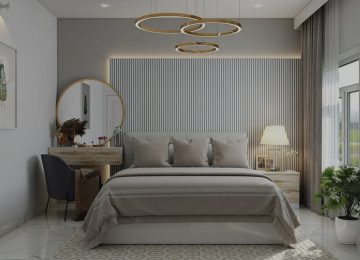
Accent light adds depth and mood: a glow behind the headboard, a lit niche, a strip along a shelf, or a soft wash on a textured wall. It is not for seeing by. It makes a room feel designed and gives you a low, restful light for the evening.
Why Bedroom Lighting Should Be Planned Before Furniture Is Built
Lighting decisions are cheap on paper and expensive on site. Once panels are cut, finished and installed, adding a hidden wire or a recessed strip means drilling into finished furniture or running visible cables. Planning lighting with the furniture lets the wiring, sockets and fittings be built in cleanly. For the wider context of bedroom planning, see our guide to modern bedroom interior design.
The Ceiling Point and Fan Problem in Indian Bedrooms
Most Indian bedrooms have a ceiling fan at the centre, which takes the spot where a central light would go and casts moving shadows from its blades. A few points help:
- Decide the fan position first, and then place other lights around it.
- Avoid recessed downlights directly in line with the fan blades, since the blades can create a flickering effect.
- Use perimeter lighting, such as cove lights, wall lights or lights near the edges, for ambient light instead of a single central fitting.
- Check that the fan point and any false ceiling work are coordinated, so the fan is fixed to the structure and not to the false ceiling.
A fan with an integrated light is rarely enough on its own. Treat it as a bonus, not the main source.
What Can’t Be Added After Fabrication
Some things are easy to plan and hard to retrofit once furniture is made:
- Wiring channels and hidden cable routes inside panels
- Sockets inside wardrobes, headboards and dressing units
- Grooves or profiles for LED strips
- Cut-outs for switches and sensors
- A hidden, ventilated space for LED drivers (power supplies) with access for servicing
- Openings in back panels for wires
Anything not planned can usually still be done with surface-mounted lights and visible cables, but the result is rarely as clean.
Lighting Ideas Built Into Bedroom Furniture
Furniture lighting makes a bedroom feel complete, and built-in lighting keeps wiring hidden and surfaces uncluttered. These are the places where it works best.
Wardrobe Lighting
Wardrobe lighting ideas start with a simple problem: most wardrobes are dark inside, and it is hard to see colours. Two approaches work well together.
Interior Lights and Door-Activated Sensors
LED strips fixed along the vertical edges, under shelves or along the hanging rail light the clothes evenly. A door-activated sensor turns the lights on when the door opens and off when it closes, so you never forget them. Choose lights with good colour rendering, so a navy shirt does not look black. Allow for the sensor and wiring in the carcass design. Wardrobe LED lights generate little heat, but they still need ventilated, accessible drivers.
Lighting the Front of the Wardrobe
A concealed strip above the wardrobe, along the loft, or at the base can wash the front of the doors with light, which adds depth and a soft night glow. Keep the light shielded so you see the glow, not the strip. In a walk-in, lighting along the ceiling edge and inside each section gives an evenly lit dressing space. See our modular wardrobe designs and walk-in wardrobe design pages for layouts.
Headboard and Bed Lighting
Headboard lighting and a bed with lights set the mood of the room. Common ideas include:
- Indirect strip behind the headboard: a soft wash of light on the wall behind the bed.
- Reading lights set into the headboard panel: adjustable, directional lights for each side.
- Low-level lighting under the bed: a gentle glow along the floor for night-time walks, ideally on a motion sensor.
Keep any strip out of the direct line of sight from the pillow, and make it dimmable. Our bed designs show headboard and storage options.
Bedside Lighting: Built-In Units, Wall Lights or Lamps
Bedside lighting ideas come down to three choices.
- Built-in bedside units with lit niches or lights integrated into the panel keep the area tidy and use no table space. They must be planned before the furniture is made.
- Wall lights on either side of the bed free up table space. Their wiring must be planned before the wall is finished.
- Table lamps are the most flexible and the easiest to change, but they need sockets within reach and take up surface.
Choose based on the space. In small bedrooms, wall lights or built-in lights save the most room. In larger rooms, lamps add personality.
Dressing Unit and Mirror Lighting
Dressing table lighting works best from the front or both sides of the mirror, with neutral white light and good colour rendering, so makeup and clothing colours look true. Overhead light alone casts shadows. Plan the wiring and any backlit panel before the unit is built.
Study Table and Work Corner Lighting
A study table needs even, glare-free light on the work surface. A strip under a shelf or a side-mounted lamp works well, and the light should come from the side or front, not from behind where it creates shadows and screen glare. Choose a slightly cooler, neutral white for focus, and keep it separate from the bedroom’s warm lights.
Wall Unit and Open Shelf Lighting
A lit niche or a strip along an open shelf turns a wall unit into a display feature and adds a gentle glow in the evening. Keep the light low and warm, and avoid over-lighting, since a glaring shelf in a bedroom feels harsh. Plan for dusting, as open shelves collect dust.
Choosing the Right Light Quality for a Bedroom
The quality of light matters as much as where it is placed.
Warm vs Cool Light
Warm white light bedroom schemes use light in the region of 2700 to 3000K, which feels soft and restful in the evening. Neutral to cool white, around 4000K and above, is better for tasks such as dressing, makeup and study, where you want to see colours and detail clearly. These are general guidelines. A good approach is warm light for ambient and accent layers, and neutral for task lighting. Keep all strips of the same type at the same colour temperature, so they do not look mismatched.
Dimmers and Separate Switching
Put each layer on its own switch, so you can turn the task light on without lighting the room. Use dimmers where possible, and check that the dimmers and LED drivers are compatible, since mismatches cause flicker. Two-way switching at the door and the bedside lets you turn lights off from bed. Where partners keep different hours, separate bedside controls help. Our guide to his and hers wardrobe design covers how to balance two people’s routines.
Avoiding Glare Near the Bed
The area around the bed is where glare matters most, because you look at it while lying down. Shield or recess light sources, use diffusers over strips, and avoid bare bulbs in your line of sight. Aim reading lights at the page, not the room, so they do not disturb a partner.
Bedroom Lighting Ideas by Room Type
Small Bedrooms
Small bedroom lighting ideas aim to make the room feel bigger and less cluttered. Use indirect ambient light from cove or wall-washing strips, replace bedside lamps with wall lights or built-in lights to free the surfaces, and keep the colours light. A mirror opposite a light source can add brightness. Avoid heavy pendant fittings. For more on compact layouts, see our sliding wardrobe design page, and our older guide to bed design ideas for small rooms.
Master Bedrooms
Master bedroom lighting has room for more layers: soft ambient light, independent bedside lights, wardrobe and dressing lighting, accent lighting behind the headboard, and perhaps a lit seating corner. Separate switching and dimming are especially valuable here. With so many fittings, a lighting plan on paper, agreed before work starts, avoids clashes.
Children’s Rooms
Kids bedroom lighting should be soft, safe and flexible. Use gentle ambient light, a low night light that is easy to switch, and a good, glare-free study light as the child grows. Keep fittings low-heat, keep strips and wiring out of reach, and use socket covers. Dimmers help with bedtime. See our guide to designing a modular bedroom for kids.
A Lighting Checklist to Share With Your Electrician and Furniture Designer
Agree these points before the false ceiling is finished and before furniture is manufactured:
- Ceiling: fan position, ceiling light points and cove or false ceiling lighting
- Switches: positions at the door and at both sides of the bed, with two-way switching where needed
- Sockets: bedside, dressing, study, inside wardrobes, and for hair tools
- Furniture wiring: cable routes into the wardrobe, headboard, dressing and study units
- Light positions: strips, niches, reading lights and sensors, marked on the furniture drawings
- Drivers: where each LED power supply sits, with ventilation and service access
- Colour temperature: warm for ambient and accent, neutral for task, consistent across strips
- Dimming and switching: which lights are dimmable and which share a switch
- Safety: earthing, heat clearances and safe sockets, especially in children’s rooms
- Sign-off: one lighting plan drawing, agreed by the electrician and the furniture designer
Saviesa plans lighting provisions together with the furniture, builds every piece to the exact dimensions of the room, and coordinates electrical work through its turnkey partners, so the wiring and the furniture are designed together. See our Full Home furniture page and our guide to turnkey interior design for how the one-stop approach works, and use the Saviesa store locator to see furniture in person.
FAQs
Which light colour is best for a bedroom: warm or cool?
Warm white, around 2700 to 3000K, suits the general and accent lighting in a bedroom because it feels calm and restful. Use neutral white, around 4000K, for task areas such as the dressing mirror and study table. These are general guidelines.
How do I light a bedroom with a ceiling fan?
Fix the fan position first, then light the room from the edges using cove lights, wall lights or perimeter fittings. Avoid downlights directly in line with the fan blades, which can cause flicker, and do not rely on a fan light alone.
Can lights be added inside a wardrobe after it’s installed?
Often, with battery or plug-in strips and visible cables, but the result is rarely as neat as built-in lighting. Hidden wiring, sensor cut-outs and driver space are much easier to plan before the wardrobe is made.
Are wall lights or table lamps better beside the bed?
Wall lights save table space and suit small rooms, but their wiring must be planned before the wall is finished. Table lamps are flexible and easy to change, but they take up space and need nearby sockets. Many bedrooms use one on each side, chosen to suit the room.
How many lights does a bedroom need?
There is no fixed number. Think in layers: soft ambient light, task light at the bed, mirror and desk, and a little accent light. A small bedroom may achieve this with a few well-placed fittings, while a master bedroom may use more.
Do LED strips in furniture need maintenance?
Very little. LED strips last a long time, but they collect dust, and the drivers can fail or overheat if unventilated. Plan access to the driver so it can be replaced, wipe the strips occasionally, and use the same type if you replace a section so the colour matches.