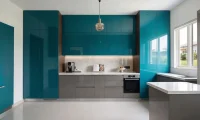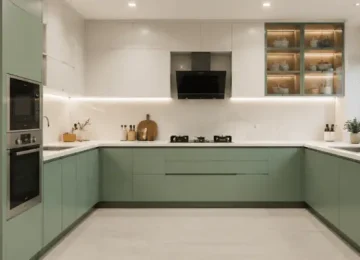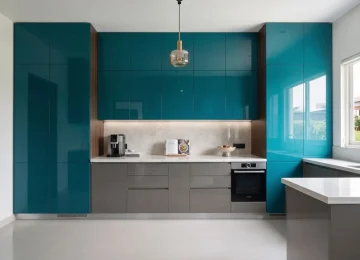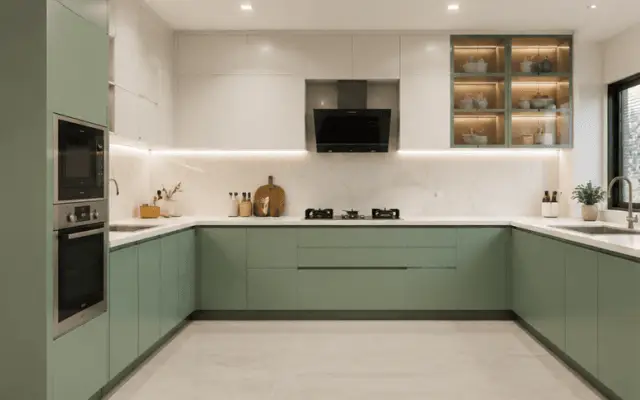
Ask any modular kitchen designer which finishes homeowners shortlist most often, and the answer is nearly always the same two: acrylic and laminate. One promises a deep, glossy, showroom look. The other promises practicality, variety and fewer worries. Both are good, and neither is right for every kitchen.
This guide compares acrylic vs laminate for the kitchen across looks, durability, heat, moisture, upkeep and cost, and explains which one tends to suit Indian cooking conditions better. By the end, you should be able to choose with confidence, or choose both.
What Are Acrylic and Laminate Kitchen Finishes?
Both are surface finishes applied to a core board. Neither is a complete cabinet. The strength, moisture performance and long-term stability of the kitchen depend on the core board, the edge sealing and the hardware beneath, whichever finish you choose.
What Is an Acrylic Kitchen Finish?
An acrylic kitchen finish is a layer of acrylic sheet bonded to a core board such as MDF, HDHMR or plywood. It gives a smooth, non-porous surface in gloss or matte, with a depth of colour that is hard to match. It is popular in contemporary and handleless kitchens. For a full look at acrylic, see our guide to acrylic kitchen cabinets.
What Is a Laminate Kitchen Finish?
A laminate kitchen finish is a decorative surface made from layers of paper impregnated with resin and pressed into a hard sheet, which is bonded to a core board. The top layer carries the colour, wood grain or texture. Laminate is available in a very wide range of looks, from plain colours to realistic woods and stone effects, in gloss, matte and textured surfaces. For where both sit among other options, read our guide to the types of shutters in a modular kitchen.
Acrylic vs Laminate for Kitchen: Key Differences
Appearance and Aesthetics
Acrylic gives a sleek, continuous surface with unusual depth of colour, especially in gloss. Laminate offers more variety: wood grains, stone looks, fabric textures and plain colours. If you want a polished, modern, light-reflecting kitchen, acrylic is the more striking choice. If you want warmth, texture or a natural-material look, laminate has more to offer.
Durability and Scratch Resistance
As a general rule, good-quality laminate tends to cope better with everyday abrasion than gloss acrylic, which can show fine scratches. High-gloss laminate can also mark, though, and the quality of either product matters more than the category. Ask each maker how their surface is rated and protected.
Heat and Moisture Resistance
Both surfaces are non-porous and shed water well. In practice, the weak point for moisture is usually the edge or joint, not the face, so edge-banding quality matters for both. Heat is different: acrylic is more sensitive to sustained direct heat, so it needs care beside a hob or oven, while laminate generally tolerates heat somewhat better. Neither is heatproof, and both need protection near flames and very hot surfaces.
Cleaning and Maintenance
Both wipe clean with a soft cloth and mild soap. Gloss acrylic shows fingerprints, smears and water spots most and needs frequent wiping. Matte laminate hides marks best. Heavily textured laminate can hold dust or grease in the grain, so it takes a little more effort to clean thoroughly.
Colour and Finish Options
Both come in a wide range. Acrylic is strongest in rich solid colours and glossy or soft-matte finishes. Laminate is strongest in woodgrain, texture and pattern. If you want a specific timber look at a practical price, laminate is usually the answer.
Cost
Acrylic generally costs more than laminate, though the gap varies with the quality of the sheet and the construction. Compare like for like, including the core board, edges and hardware, not just the finish name.
Long-Term Appearance
Acrylic keeps its depth and colour best when it is well made and carefully cleaned. Lower-quality sheets may fade or discolour in strong sunlight, and gloss can dull with fine scratches over time. Laminate tends to age quietly, though poorly bonded laminate can lift at the edges, especially in damp areas. Good manufacturing quality is the main protection with either.
Acrylic Kitchen Finish: Pros and Cons
Advantages of Acrylic
- Striking look: deep colour and a mirror-like gloss, or a soft, refined matte.
- Seamless surface: flat, clean fronts that suit handleless and modern designs.
- Light: gloss reflects light and can make a compact kitchen feel larger.
- Easy to wipe: the non-porous surface does not absorb oil or splashes.
Disadvantages of Acrylic
- Marks: gloss shows fingerprints and smudges, particularly in dark colours.
- Scratches: fine scratches can show and are hard to repair.
- Heat sensitivity: needs care near the hob and oven.
- Cost: generally higher than laminate.
Laminate Kitchen Finish: Pros and Cons
Advantages of Laminate
- Variety: a huge range of colours, wood grains and textures.
- Practicality: generally good resistance to everyday wear.
- Forgiving: matte and textured laminates hide marks well.
- Value: usually the more economical of the two.
Disadvantages of Laminate
- Less depth: it does not have acrylic’s deep, glossy look.
- Edges: poorly bonded or sealed edges can lift, particularly in damp areas.
- Seams: visible joints and edge lines are more noticeable than on a seamless acrylic front.
- Texture: heavily textured surfaces can be harder to clean thoroughly.
Acrylic vs Laminate for Kitchen: Comparison Table
| Factor | Acrylic | Laminate |
|---|---|---|
| Look | Sleek, deep colour, gloss or matte | Wide range: wood grain, texture, colour |
| Scratch resistance | Gloss can show fine scratches | Generally better in daily use |
| Heat tolerance | More sensitive to direct heat | Generally tolerates heat somewhat better |
| Moisture | Surface resists water; edges and core matter | Surface resists water; edges and core matter |
| Cleaning | Easy wipe; gloss shows marks | Easy wipe; textured can trap dust |
| Fingerprints | Visible in gloss, less in matte | Hidden well in matte and textured |
| Colour options | Rich solids, gloss and matte | Very wide, including wood and stone looks |
| Cost | Generally higher | Generally lower |
| Long-term look | Excellent if well made and cared for | Ages quietly; edges are the weak point |
| Best suited to | Modern, light-seeking kitchens | Busy, practical family kitchens |
Which Is More Durable: Acrylic or Laminate?
In everyday use, good-quality laminate is generally the tougher surface, particularly against scratches and heat. Acrylic is durable too, but it asks for more care, especially in gloss.
The more important point is that durability depends on the whole cabinet. The core board, the edge sealing, the quality of the bond and the hardware often decide how a kitchen lasts, far more than the finish name. A well-built acrylic kitchen will outlast a poorly built laminate one, and the reverse is equally true. Ask how each cabinet is made and what is covered in writing.
Which Is Easier to Maintain: Acrylic or Laminate?
For most households, matte or smooth laminate is the easier surface to live with, since it hides fingerprints and tolerates occasional rougher handling. Acrylic is just as easy to wipe, but gloss acrylic needs wiping more often to look its best, and it needs soft cloths and gentle cleaners to avoid scratching or dulling.
If you enjoy keeping a kitchen gleaming, acrylic rewards the effort. If you want a kitchen that looks good with minimal fuss, laminate usually wins. Matte acrylic sits somewhere in between.
Acrylic vs Laminate for Indian Kitchens
Indian cooking brings its own demands: frequent frying and tempering, strong heat, lots of steam and, in many regions, high humidity. Here is how each finish copes.
Handling Heat and Steam
Cabinets near the hob take the most heat and steam. Laminate generally tolerates this better, while acrylic needs more care and distance from direct heat. A properly sized chimney reduces how much steam and grease reach the cabinets in the first place.
Resistance to Humidity and Moisture
Both surfaces resist water on the face. Humidity attacks edges, joints and the core board, so look for good edge-banding and moisture-resistant boards whichever finish you choose. Ask the maker how edges are sealed, especially around the sink.
Suitability for Indian Cooking
Oil mist and masala stains settle on cabinet fronts. Both finishes wipe clean, but gloss acrylic will show greasy marks more readily, and textured laminate can hold grease in the grain. Smooth matte surfaces are a sensible middle ground near the cooking zone.
Everyday Cleaning and Usage
Plan on wiping the fronts regularly, using a soft cloth and mild soap, and avoiding abrasive pads on either finish. For advice on keeping the rest of the kitchen clean, see our guide to cleaning kitchen appliances.
Acrylic vs Laminate: Which Finish Looks Better?
“Better” depends on the look you want. Here is what each version does best.
High-Gloss Acrylic
The most dramatic option: reflective, vivid and bright. It suits compact kitchens that need light and homeowners who like a polished, contemporary look. It needs regular wiping.
Matte Acrylic
Calmer and more refined, with less glare and fewer visible fingerprints than gloss. It works well in minimalist and handleless kitchens.
Glossy Laminate
A budget-friendly route to a bright, glossy look. It does not quite match the depth of acrylic, but it can be a good choice for upper units or smaller kitchens.
Matte and Textured Laminate
The most forgiving and the most versatile. Woodgrain, stone and fabric textures bring warmth and character, and they hide marks well, which makes them a favourite for busy family kitchens.
Acrylic vs Laminate: Which Is More Affordable?
Laminate is generally the more affordable choice, and acrylic usually sits higher. The difference is not fixed. It depends on the sheet or laminate quality, the core board, the edge treatment and the hardware.
The safest way to compare is to ask for itemised quotes with the same core board, the same hardware and the same layout, changing only the finish. That shows what the finish itself adds. A common approach is to use acrylic where it is most visible and laminate elsewhere to manage the total.
How to Choose Between Acrylic and Laminate for Your Kitchen
Consider Your Budget
If budget is tight, laminate gives more finish for the money. If you can stretch, acrylic on the most visible units, such as tall units or the island, delivers the biggest visual impact per rupee. For wider planning advice, see our modular kitchen design page.
Consider Your Kitchen Usage
Heavy daily cooking, young children and lots of traffic favour laminate. Lighter cooking or a mainly display-led kitchen gives you more freedom to choose acrylic.
Consider Maintenance Requirements
Be honest about how much wiping you will do. If the answer is “as little as possible”, choose matte or textured laminate. If you do not mind a quick daily wipe for a glossy result, acrylic is a good fit.
Consider Your Preferred Look
Choose acrylic for a sleek, modern, reflective kitchen, particularly if you like handleless fronts. Choose laminate for warmth, wood tones and texture. For more on handleless designs, see our guide to handleless kitchen cabinets.
Consider Durability and Long-Term Performance
Ask each maker about the core board, edge sealing, hardware and what is covered. These details predict how the kitchen will look in several years better than the finish name does. Seeing samples in person is the best test, and you can find a store on the Saviesa store locator.
Can You Combine Acrylic and Laminate in the Same Kitchen?
Yes, and many well-designed kitchens do. Combining the two lets you put each material where it performs best: laminate on lower and heavy-use units, and acrylic on tall units, wall cabinets or an island for visual impact.
A few rules keep the result looking deliberate. Keep to a small palette, ideally two main colours or tones. Match edge details and handle or handleless styles across both. View samples of both side by side, because the same colour can look slightly different in different materials and sheens. Saviesa’s Emblem Collection brings acrylic and synchro-laminate finishes together, which is one way to see how they pair.
FAQs About Acrylic vs Laminate for Kitchen
Which is better for kitchen cabinets, acrylic or laminate?
Neither is better for everyone. Acrylic gives a glossy, seamless, modern look but needs more care. Laminate is more varied, more forgiving and usually more affordable. Choose based on your budget, how much you cook and how much upkeep you accept.
Is acrylic more durable than laminate?
Generally not in everyday wear. Good laminate tends to cope better with scratches and heat. Acrylic is durable when well made, but it needs more careful handling. Overall durability depends mostly on the core board, edge sealing and hardware.
Is laminate better for Indian kitchens?
Often, yes, particularly near the hob, where heat and steam are higher. Laminate generally tolerates heat somewhat better and hides marks well. Acrylic can work well too, with distance from direct heat, good ventilation and careful cleaning.
Which is easier to clean, acrylic or laminate?
Both wipe clean with a soft cloth and mild soap. Matte or smooth laminate is easier day to day, since it hides marks. Gloss acrylic shows fingerprints and smears, so it needs wiping more often.
Is acrylic more expensive than laminate?
Usually, yes. The difference depends on sheet quality, core board, edges and hardware, so compare itemised quotes with the same specification and change only the finish.
Which is more scratch-resistant, acrylic or laminate?
Good-quality laminate generally resists everyday scratching better than gloss acrylic. High-gloss laminate can still mark, and some acrylic products are better protected than others, so ask the manufacturer about the specific surface.
Which finish is better for a modern modular kitchen?
Acrylic suits sleek, handleless, high-impact designs, while textured or matte laminate suits warmer, practical designs. Many modern kitchens combine both, using acrylic for visible units and laminate for heavy-use areas.
Can acrylic and laminate finishes be combined in one kitchen?
Yes. Keep to a small palette, match edge details and handle styles, and view the samples side by side. Using laminate on the base units and acrylic on the tall units or island is a common, practical combination.