
Walk In Wardrobe Design
Your Home’s Wisdom
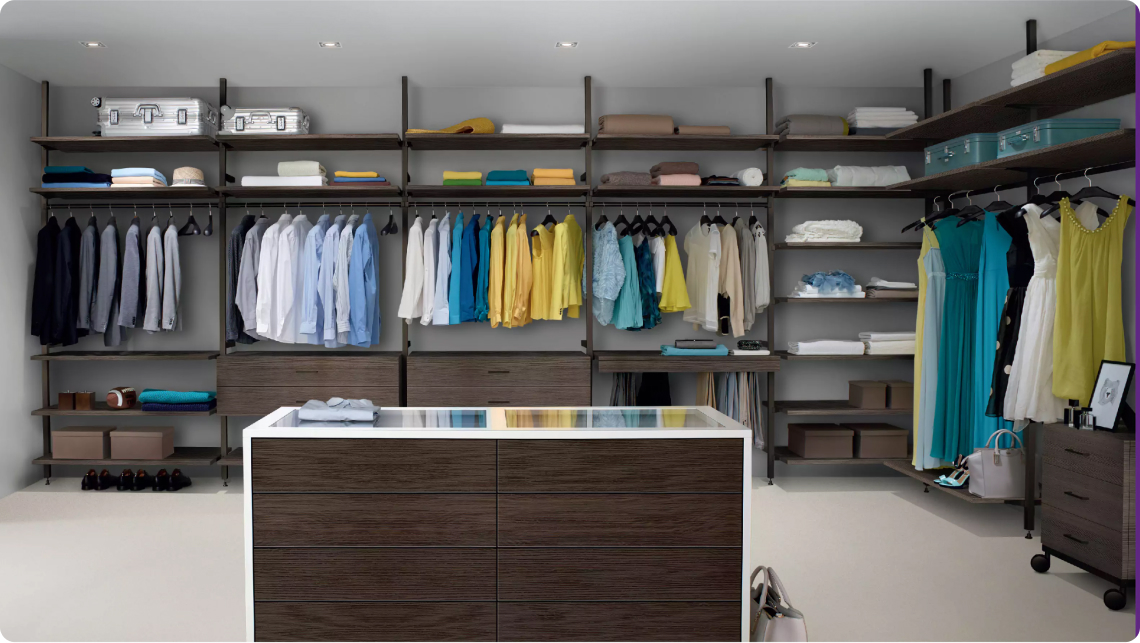
Walk-In Wardrobe Meaning: What Is It & Why Modern Homes Love It
What Is a Walk-In Wardrobe?
A Walk-In Wardrobe is a dedicated, walkable space designed to store clothing, accessories, and essentials while allowing ease of movement within it.
Unlike traditional wardrobes that are accessed from the outside, a Walk-In Wardrobe is entered-functioning as a compact dressing area where everything is visible, accessible, and intuitively arranged.
Benefits of a Walk-In Wardrobe
A well-designed Walk-In Wardrobe introduces order without effort. Everything has a place, and more importantly, remains within reach.
It also adds a quiet sense of luxury-not through excess, but through space, proportion, and thoughtful detailing. Over time, this translates into both everyday convenience and long-term value within the home.
Walk-In Wardrobe Designs for Bedroom Spaces
The design of a Walk-In Wardrobe is never isolated-it responds to the proportions of the bedroom, the volume of storage required, and how the space is used daily.
U-Shaped Walk-In Wardrobe Design
A U-shaped layout uses three walls, offering maximum storage capacity. It works best in larger bedrooms where a dedicated dressing zone can be carved out.
With storage on all sides, it allows for clear categorisation-clothing, accessories, and seasonal wear each finding their own place.
L-Shaped Walk-In Wardrobe Design
An L-shaped configuration balances storage and openness. Positioned along two adjoining walls, it leaves room for movement while maintaining adequate storage.
This layout suits medium-sized bedrooms, where space must be used with intention.
Galley Walk-In Wardrobe Layout
The galley layout places storage along two parallel walls, creating a central walkway. It is efficient, structured, and particularly suited for compact spaces.
Despite its simplicity, it can be highly effective when proportions are carefully planned.
Open Walk-In Wardrobe Designs
Open wardrobes remove visual barriers. Without shutters, the space feels lighter and more immediate.
This approach requires discipline in organisation, but rewards with clarity-everything visible, nothing hidden.
Luxury Bedroom Walk-In Wardrobe Designs
In larger homes, the wardrobe becomes an extension of the bedroom rather than a separate entity.
Materials, finishes, and lighting are aligned with the bedroom’s language-glass panels, soft lighting, and refined textures creating continuity. The result is not just functional, but composed.
Bedroom Walk-In Wardrobe Layout Planning
A well-planned wardrobe begins with proportion. Without this, even the most refined finishes cannot compensate.
Ideal Walk-In Wardrobe Dimensions
At a minimum, a walkable wardrobe requires enough width for both storage and movement. Comfortable circulation ensures that the space feels usable, not constrained.
Clearances between shelves, hanging sections, and walkways must be intentional-not approximate.
Planning Based on Bedroom Size
In smaller bedrooms, a compact or semi-open wardrobe can be integrated without overwhelming the space.
Medium-sized rooms allow for L-shaped or partially enclosed layouts, offering a balance of openness and storage.
Master bedrooms, by contrast, can accommodate a dedicated dressing area-allowing the wardrobe to function as a separate zone altogether.
Lighting & Ventilation Planning
Lighting defines how the wardrobe is experienced. Layered lighting-ambient and task-ensures visibility without harshness.
Ventilation is equally essential. Natural airflow prevents moisture buildup and maintains the longevity of materials and clothing.
Walk-In Wardrobe Ideas to Inspire Your Space
Inspiration, when applied thoughtfully, becomes direction.
Minimalist Walk-In Wardrobe Ideas
Clean lines, muted palettes, and concealed storage define minimalist wardrobes. The focus remains on clarity-nothing unnecessary, everything intentional.
Modern Glass Wardrobe Concepts
Glass introduces lightness. Whether transparent or tinted, it softens the visual weight of storage while allowing partial visibility.
Walk-In Wardrobe Island Ideas
A central island adds structure to larger wardrobes. It creates a focal point while offering additional storage for accessories.
More importantly, it defines movement-organising the space around it.
Small Walk-In Wardrobe Ideas for Apartments
In compact homes, vertical storage becomes essential. Sliding partitions, open shelving, and careful zoning help maximise limited space without making it feel crowded.
His & Hers Wardrobe Concepts
Dividing the wardrobe into personal zones brings clarity. Each section reflects individual needs while maintaining overall cohesion.
Storage & Organization Inside a Walk-In Wardrobe
Organization is not about capacity-it is about accessibility.
Smart Storage Accessories
Pull-out trays, tie racks, and jewelry organizers allow smaller items to be stored without being lost. These details, often overlooked, define usability.
Clothing Zoning Strategy
Arranging clothing by frequency of use simplifies daily routines. Daily wear remains within easy reach, occasion wear is preserved, and seasonal items are rotated as needed.
Shoe & Accessories Storage Ideas
Dedicated shelving for footwear and accessories prevents clutter. The balance lies in deciding what to display and what to conceal.
Materials, Finishes & Style Options
Materials shape both durability and experience.
Best Materials for Walk-In Wardrobes
Plywood offers structural strength, while MDF allows for finer finishes. Glass introduces openness, and laminates provide surface refinement.
The choice is rarely singular-it is often a combination, selected with purpose.
Sliding vs Hinged Wardrobe Doors
Sliding systems save space and maintain visual continuity. Hinged doors allow full access to storage.
The decision depends on spatial constraints and how the wardrobe is used.
Colour & Finish Selection
Neutral palettes create longevity. Matte finishes offer softness, while gloss reflects light.
Consistency with the bedroom’s overall design ensures the wardrobe feels integrated, not added.
Walk-In Wardrobe Cost & Customization Guide
Cost, in this context, is a reflection of decisions made early.
Factors Affecting Cost
The size of the wardrobe, choice of materials, internal accessories, and lighting all influence the final outcome.
Each element adds not just to cost, but to functionality.
Custom vs Modular Walk-In Wardrobes
Modular systems offer structure and predictability. Custom wardrobes, however, respond precisely to space and lifestyle.
The distinction lies in adaptability.
How Professional Designers Customize Wardrobes
A considered process begins with understanding how the wardrobe will be used.
From there, layouts are planned, materials are selected, and details are refined-ensuring that the final space feels resolved, not assembled.
How to Design a Perfect Walk-In Wardrobe (Step-by-Step)
Step 1: Assess Storage Needs
Understanding what needs to be stored defines everything that follows.
Step 2: Select Layout
The layout should respond to both space and movement-not just capacity.
Step 3: Choose Materials & Lighting
Materials and lighting work together to define both durability and experience.
Step 4: Organize Functional Zones
Zoning ensures that the wardrobe works intuitively-each section placed with intent.
Maintenance Tips for Walk-In Wardrobes
Cleaning & Dust Prevention
Regular cleaning preserves both appearance and hygiene. Open wardrobes may require more frequent upkeep.
Long-Term Maintenance Tips
Periodic checks of hardware, maintaining ventilation, and avoiding overfilling help sustain the wardrobe over time.
Why Choose Our Customized Walk-In Wardrobes
Personalized Design Consultation
Every wardrobe begins with a conversation-understanding space, habits, and preferences before any design is proposed.
End-to-End Execution
From design to manufacturing to installation, the process remains consistent and controlled.
Quality Materials & Warranty
Materials are selected for longevity, and execution is guided by precision-ensuring the wardrobe performs as intended over time.
Want a Customized Wardrobe according to your needs?
Frequently Asked Questions About Walk-In Wardrobes
What is the difference between a wardrobe and a walk-in closet?
A wardrobe is typically accessed externally, while a walk-in closet is a space you can enter, allowing for movement and integrated storage.
What are the two types of wardrobes?
Built-in wardrobes are fixed to the structure of the home, while freestanding wardrobes are movable. Modular wardrobes offer a system-based alternative.
What is the 3-3-3 rule for wardrobe?
It refers to a capsule wardrobe concept-limiting clothing to a curated set that can be mixed and matched across occasions.
What is another name for a walk-in wardrobe?
It is also referred to as a walk-in closet, dressing room, or wardrobe room.
Do walk-in wardrobes have doors?
They can be open or enclosed, depending on design preference and space requirements.
Is it worth having a walk-in wardrobe?
For homes with adequate space, it enhances organization, usability, and overall living experience.
Is a walk-in wardrobe a good idea?
It is well-suited for those who value accessibility, organization, and a dedicated dressing space.
What is the ideal size for a walk-in wardrobe?
The size varies, but it should comfortably allow storage on at least one side and movement within the space.
Where should a walk-in wardrobe be placed?
Ideally adjacent to or within the bedroom, often as a transition between the bedroom and bathroom.